
What Information Does an IMEI Number Reveal?
Byadmin
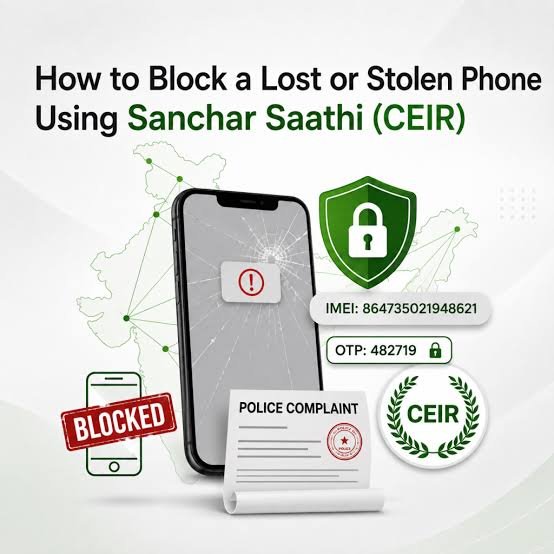
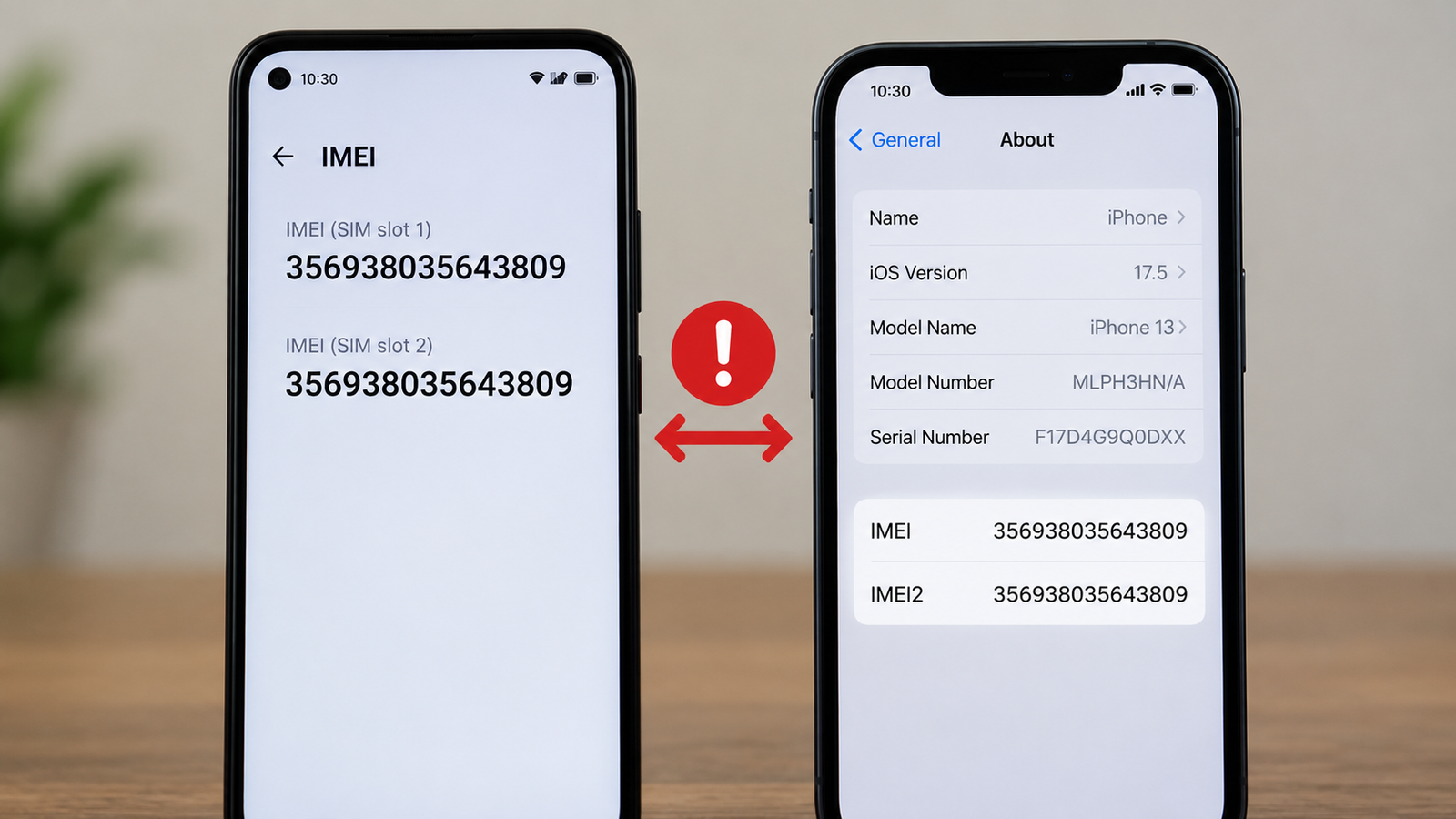
An IMEI (International Mobile Equipment Identity) number is a unique 15-digit identification number assigned to a mobile device. It helps identify a particular handset when it connects to a cellular network. Every mobile phone has an IMEI number, and dual-SIM devices generally have two separate IMEI numbers.
Many people become concerned about their privacy when they lose their phone or share their IMEI number with someone else. A common question is whether another person can use an IMEI tracker to find their phone's location without permission.
The short answer is that an ordinary person cannot directly access someone's live phone location simply by entering their IMEI number into an online tracker. However, mobile network operators and authorised law enforcement agencies can use IMEI information as part of their device identification and investigation processes.
An IMEI number can reveal or help establish several things:
Device identity: It helps identify a particular mobile handset on a cellular network.
Device model information: Certain IMEI digits are associated with the device's manufacturer and model.
Network identification: Telecom operators can identify a handset when it connects to their network.
Lost or stolen device status: Authorities can use IMEI records to identify devices reported as lost or stolen.
Device tracking assistance: Network records associated with an IMEI can help authorised authorities investigate a stolen or missing phone.
However, an IMEI number does not independently reveal someone's name, home address, personal messages, photographs, contacts, or real-time GPS coordinates. Access to such information depends on separate systems, permissions, and legal authority.
Can Police Track a Phone Using Its IMEI Number?
Yes, police can use an IMEI number to help trace a lost or stolen mobile phone, depending on the available network information and investigation process.
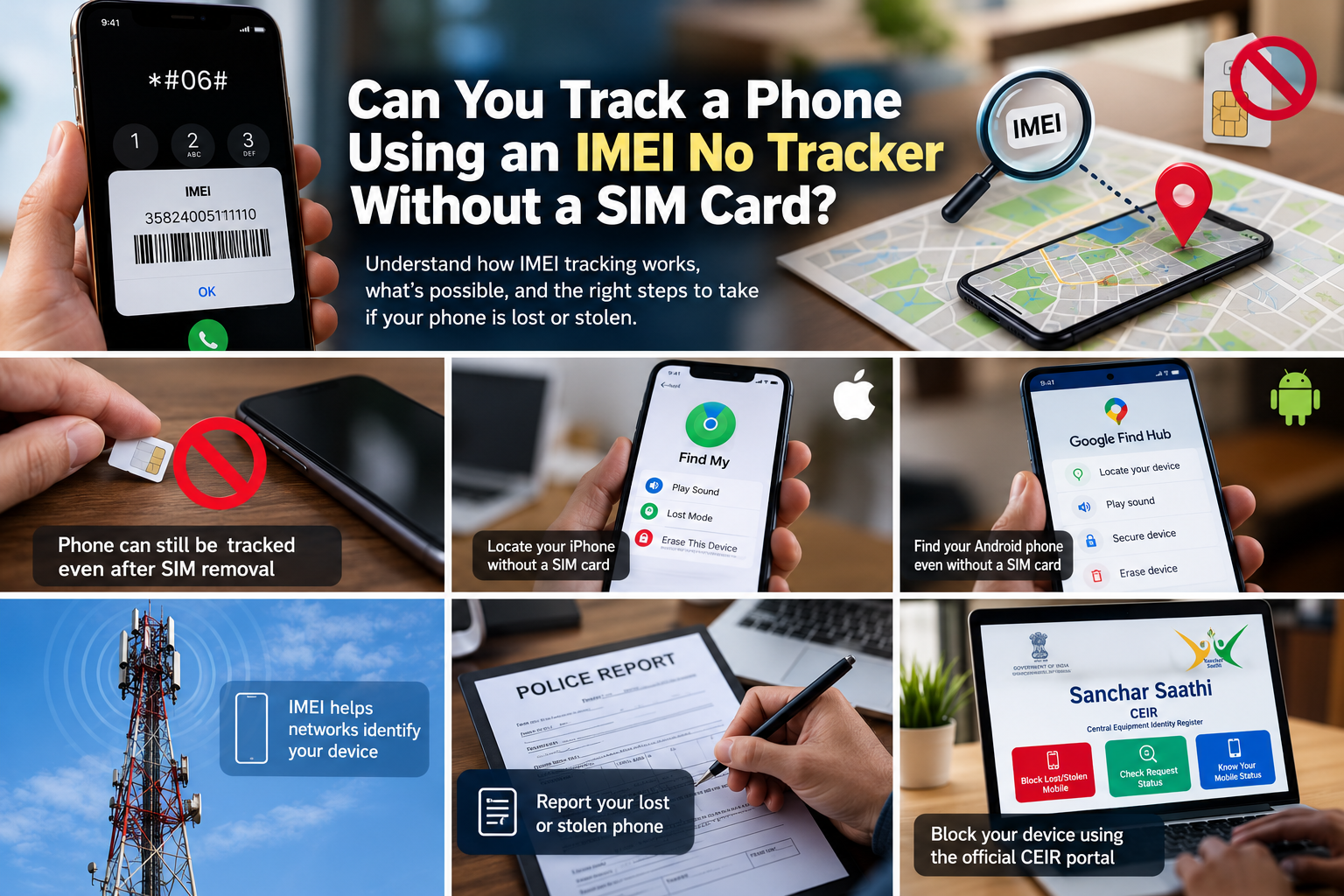
When someone reports a lost cell phone, the IMEI number becomes an important identification detail. Even if the person who finds or steals the handset removes the original SIM card and inserts another one, the device still retains its IMEI number unless it has been tampered with.
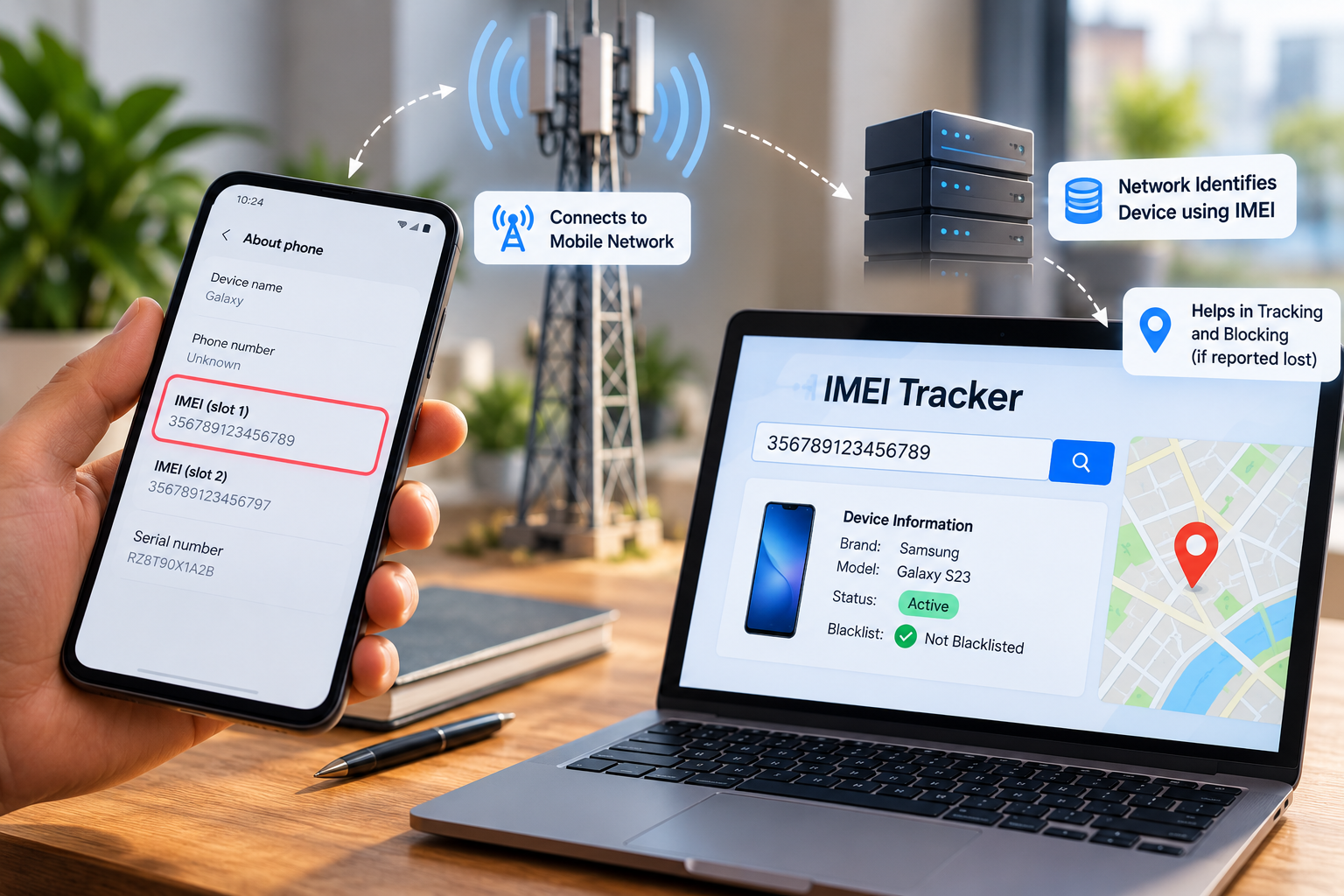
When that handset connects to a participating cellular network, the network can identify the device using its IMEI. This information can help authorities investigate whether the missing handset has become active again.
For example, imagine that you lose your smartphone while travelling. Someone finds it, removes your SIM card, and inserts a different SIM card. Changing the SIM does not normally change the handset's IMEI. Therefore, the device may still be identifiable through network records.
How Does IMEI-Based Tracking Work?
IMEI-based identification works through the relationship between a mobile handset and the cellular network.
Whenever a compatible mobile device connects to a cellular network, the network can receive device identification information, including its IMEI. Telecom operators maintain relevant network records that may assist authorised investigations.
The general process involves:
Device identification: Authorities obtain the IMEI number from the phone owner, purchase invoice, packaging, or available device records.
Police complaint: The owner reports the missing or stolen handset to the police.
Network identification: Telecom operators can identify the handset when it connects to their network.
Investigation: Relevant network records and available information may help authorities establish the device's activity and investigate its possible location.
Recovery: If the investigation identifies the handset and its whereabouts, authorities can take appropriate steps to recover it.
It is important to understand that IMEI tracking is not the same as GPS tracking. An IMEI identifies the handset, while GPS and other location technologies help determine geographical location.
The accuracy and availability of location information depend on the network, available records, device connectivity, and the investigation.
Can Police Track a Phone If Someone Changes the SIM Card?
Yes, changing a SIM card does not automatically prevent a handset from being identified through its IMEI.
The SIM card identifies the subscriber, while the IMEI identifies the mobile equipment. These are two different identifiers.
For example, if someone steals your phone and replaces your SIM card, the handset can still transmit its IMEI when connecting to a cellular network. This may help telecom operators and authorised authorities identify the device.
However, if the phone remains switched off or never connects to a participating cellular network, obtaining new network-based identification or location information may not be possible.
Is It Legal for Someone to Track Your Phone Without Consent?
Tracking someone's phone without their knowledge or permission raises serious privacy and legal concerns. However, the legality depends on who is performing the tracking, the method being used, the purpose, and the applicable laws.
An ordinary individual does not have unrestricted access to telecom network records simply because they know another person's IMEI number.
Mobile network operators handle subscriber and device information under applicable legal and regulatory requirements. Law enforcement agencies may access relevant information through authorised investigation procedures.
For example, when someone reports a stolen phone, police may work with telecom operators to identify the handset and investigate its possible location. This is different from an individual secretly attempting to obtain another person's location.
In India, the Telecommunications Act, 2023 also establishes legal provisions concerning telecommunication identifiers. Section 42(3)(c) addresses tampering with telecommunication identifiers, including IMEI-related identifiers.
If someone uses unauthorised applications, account access, or other methods to monitor another person's location, additional privacy and cybercrime laws may become relevant depending on the circumstances.
Before using any IMEI tracker, understand the difference between legitimate device recovery services and websites that claim to reveal anyone's live location using only a phone's IMEI number.
Most importantly, do not assume that every website offering free IMEI location tracking is legitimate. Many such services make exaggerated claims or collect personal information without providing genuine tracking functionality.
Signs That Your Phone's Privacy May Be Compromised
Your IMEI number being known to another person does not automatically mean that your phone is being tracked. In most cases, someone cannot monitor your live location merely by knowing this number.
However, certain unusual activities may indicate that your phone's security or privacy needs attention.
Here are some things worth checking:
1. Unfamiliar Applications on Your Phone
If you notice applications that you do not remember installing, investigate them. Some applications may request unnecessary permissions to access your location, microphone, camera, or contacts.
Check your installed applications and remove anything suspicious after verifying that it is not a legitimate system application.
2. Unexpected Location Access
Your smartphone allows you to review which applications have permission to access your location.
If an unfamiliar application has location access, especially background access, review whether it genuinely needs that permission.
On Android, you can generally check this through Settings → Location → App location permissions. The exact menu names may differ depending on your phone manufacturer and Android version.
3. Unusual Battery Consumption
Unexpected battery drain can sometimes indicate that applications are running in the background more frequently than expected.
However, battery drain alone is not proof of surveillance. Background updates, poor network coverage, ageing batteries, and other normal activities can also cause this issue.
Check your battery usage settings to identify applications consuming unusually high amounts of power.
4. Unknown Location-Sharing Settings
Location-sharing services can allow selected people or accounts to view your location.
Review your Google Maps location-sharing settings and other location-sharing applications. Remove access for people or services you no longer recognise or trust.
5. Unfamiliar Devices Connected to Your Accounts
If someone has access to your Google or Apple account, they may be able to access certain information associated with that account.
Review the devices signed into your account and remove unfamiliar sessions. Change your password and enable two-factor authentication if you suspect unauthorised access.
Remember that these signs are indicators worth investigating, not definitive proof that somebody is tracking your phone.
How to Protect Your Phone From Unauthorised Tracking
Protecting your smartphone requires more than keeping your IMEI number private. You should also secure your accounts, review application permissions, and avoid installing applications from untrusted sources.
Consider following these precautions:
Review application permissions: Allow location access only to applications that genuinely require it.
Use a strong screen lock: Set a strong PIN, password, or biometric authentication.
Secure your Google or Apple account: Use a unique password and enable two-factor authentication.
Remove suspicious applications: Uninstall applications that you cannot identify or trust.
Check location sharing: Review which people and applications can access your location.
Keep your software updated: Install official security updates to protect against known vulnerabilities.
Avoid suspicious IMEI tracker websites: Never provide passwords, OTPs, or unnecessary personal information to websites promising instant phone tracking.
These steps can help reduce the risk of unauthorised access to your personal information and location data.
What Should You Do If You Lose Your Cell Phone?
If you lose your cell phone, act quickly instead of relying on random online IMEI tracking websites.
In India, the government provides the Central Equipment Identity Register (CEIR) service through the Sanchar Saathi platform. It allows citizens to report and request the blocking of lost or stolen mobile handsets.
Here is what you should do:
Report the loss: File a police complaint or FIR and keep a copy for your records.
Get your IMEI number: Check your phone's original packaging, purchase invoice, or available device records.
Get a duplicate SIM: Contact your telecom operator to obtain a replacement SIM for the lost mobile number.
Visit the CEIR portal: Open https://www.ceir.gov.in/ and select the option to block a lost or stolen mobile.
Submit the required information: Provide the requested IMEI details, police complaint, identity proof, and other required information.
Save your request ID: Keep the generated request ID so you can check the status of your application.
Once the blocking request is processed, the handset's IMEI is shared with telecom service providers for blocking on their networks in India. CEIR also supports traceability processes that can assist police investigations.
If you recover your phone, you can request an IMEI unblock through the official portal.
For Android users, Google's Find Hub can also help locate, secure, or erase a lost device, provided the necessary account and device settings are available. iPhone users can use Apple's Find My service.
These services are generally more practical for consumers trying to recover their own lost devices than websites claiming to offer instant IMEI-based location tracking.
Frequently Asked Questions
Can Someone Track My Phone With Just My IMEI Number?
No, an ordinary person cannot directly access your phone's live location using only its IMEI number. Telecom operators and authorised authorities may use IMEI information and network records as part of legitimate investigations.
Can an IMEI Tracker Show the Exact Location of a Phone?
Not necessarily. An IMEI is a device identifier, not a GPS location service. Any location information obtained through network-based investigations depends on available network data and authorised access.
Can Someone Track a Lost Phone After Removing Its SIM Card?
Yes, the handset may still be identifiable through its IMEI if it connects to a cellular network using another SIM card. Removing the original SIM does not normally change the IMEI.
Does Switching Off a Phone Stop IMEI Tracking?
Switching off a phone prevents it from making new cellular network connections while it remains powered off. Authorities may still have previously recorded network information, but they cannot obtain fresh cellular network location updates from a completely powered-off handset.
Is It Safe to Share My IMEI Number?
Sharing your IMEI number with trusted service providers, manufacturers, or authorities for legitimate purposes is generally normal. However, avoid publishing it publicly or sharing it with unknown websites that promise unrealistic tracking services.
Can I Track IMEI Numbers Online for Free?
There is no legitimate public service that allows anyone to enter another person's IMEI number and instantly obtain their live location. You can use official services such as CEIR in India to report and block your own lost or stolen handset.
Final Thoughts
An IMEI number plays an important role in identifying mobile devices and helping authorities investigate lost or stolen phones. However, knowing someone's IMEI does not give an ordinary person permission or technical access to monitor their real-time location.
If you are concerned about privacy, focus on securing your smartphone, checking application permissions, and protecting your Google or Apple account. If you have lost your cell phone, use official recovery services such as Google's Find Hub, Apple's Find My, and India's CEIR portal rather than trusting websites promising instant IMEI tracking.
Understanding how IMEI identification works can help you protect your personal information and make better decisions when dealing with a lost or stolen mobile phone.
Leave a Reply
Your email address will not be published. Comments are reviewed before they appear.