
Can You Track a Phone Using an ICCID tracking
Byadmin
Losing a smartphone can be frustrating, especially when it contains important contacts, photos, banking apps, and personal information. In such situations, many people search online for ways to recover their device and often come across terms like ICCID, IMEI, and SIM tracking. Some websites even claim that an imei number tracker or ICCID tracking can instantly reveal the location of a lost phone.
But how much of that information is actually true?
The answer requires understanding what an ICCID number is and how mobile networks use it. While ICCID plays an important role in identifying SIM cards and managing network subscriptions, it does not function as a direct GPS tracking tool. However, it can be useful in specific situations involving mobile carriers and device investigations.
This guide explains how ICCID works, whether it can reveal a phone's location, how it differs from IMEI and SIM tracking, and the most effective methods for finding a lost smartphone today.
What Is an ICCID Number?
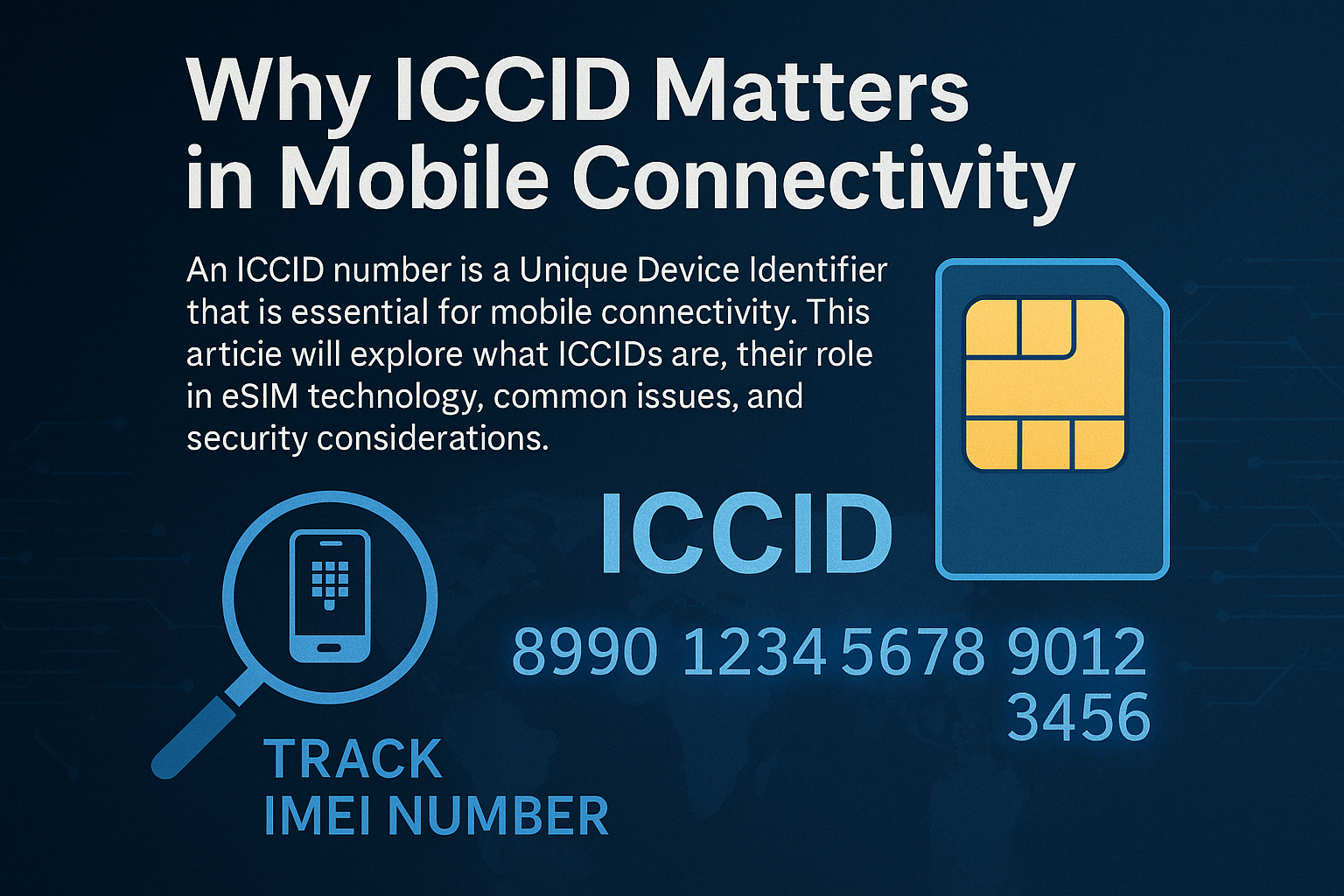
ICCID stands for Integrated Circuit Card Identifier.
It is a unique identification number assigned to every SIM card issued by a mobile carrier. Think of it as the SIM card's serial number.
An ICCID typically contains between 19 and 22 digits and helps mobile operators identify and manage subscriber accounts across their networks.
A typical ICCID may look similar to:
8986001234567890123
Each section of the number contains information related to:
- Industry identifier
- Country code
- Mobile network provider
- Individual SIM card number
Because every SIM card receives a unique ICCID, carriers can accurately associate a subscription with a specific SIM.
How ICCID Works in Mobile Networks
To understand whether ICCID can help locate a device, it's important to see how mobile networks use it behind the scenes.
Whenever a SIM card connects to a carrier's network, several identifiers are involved.
The Authentication Process
When a phone powers on:
- The SIM card sends identification data.
- The network reads the ICCID.
- Subscriber credentials are verified.
- Service access is approved.
- The device connects to nearby cell towers.
This process happens within seconds and repeats continuously as the device moves between network coverage areas.
Role of ICCID in Network Operations
ICCID primarily serves administrative purposes rather than location tracking.
Its main functions include:
- Subscription management
- Account verification
- SIM inventory control
- Activation and deactivation
- Customer support operations
According to industry estimates, mobile operators worldwide manage billions of active SIM cards, making ICCID identification essential for maintaining accurate subscriber records.
Can ICCID Reveal a Device Location?
The Short Answer
Not directly.
An ICCID number does not contain GPS coordinates or location data.
Simply having access to an ICCID number will not allow someone to see a phone's real-time location.
Why Many People Get Confused
Many users assume that because mobile carriers can identify a SIM card, they can instantly track its location.
The reality is more complicated.
An ICCID identifies the SIM card itself. It does not function as a location beacon.
What Mobile Carriers Can Potentially See
When a device with an active SIM connects to cellular towers, the carrier may know:
- Which towers the device recently connected to
- Approximate service areas
- Network registration history
- Subscriber activity records
However, this information remains within carrier systems and is generally not available to the public.
iCCID vs IMEI vs SIM Tracking
Many people use these terms interchangeably, but they represent different technologies.
| Feature | ICCID | IMEI | SIM Tracking |
|---|---|---|---|
| Identifies SIM Card | Yes | No | Yes |
| Identifies Device | No | Yes | No |
| Helps Account Management | Yes | Limited | Yes |
| Direct GPS Tracking | No | No | No |
| Used by Carriers | Yes | Yes | Yes |
ICCID
ICCID identifies the SIM card itself.
If a SIM card is replaced, the ICCID changes because a new SIM has a different identifier.
IMEI
An imei tracker focuses on the device rather than the SIM card.
IMEI stands for International Mobile Equipment Identity and remains associated with the smartphone regardless of which SIM card is inserted.
This makes IMEI valuable in stolen phone investigations.
SIM Tracking
SIM tracking refers to monitoring subscriber-related network activity.
Because SIM cards connect to cellular towers, carriers can sometimes determine approximate device locations through network records.
Why ICCID Alone Cannot Track a Phone
Many websites advertise instant ICCID tracking services.
Unfortunately, these claims are often misleading.
ICCID Limitations
An ICCID cannot:
- Display a live map location
- Show GPS coordinates
- Reveal an exact address
- Track a device independently
The ICCID simply identifies the SIM card.
Security and Privacy Reasons
Mobile carriers protect subscriber information through strict privacy regulations.
Allowing public access to location data based on an ICCID would create serious security risks.
This is why location information typically requires:
- Carrier authorization
- Account verification
- Legal requests
- Law enforcement involvement
Alternative Ways to Locate a Lost Phone
Fortunately, there are far more effective methods available today.
Use Google's Find My Device
Android users can:
- Locate a device on a map
- Ring the phone remotely
- Lock the device
- Erase personal data
Use Apple's Find My
iPhone users can:
- Track location in real time
- Mark the device as lost
- Display recovery messages
- Protect personal information
Contact Your Mobile Carrier
Your carrier can help by:
- Suspending service
- Blocking unauthorized access
- Recording device information
- Assisting authorities when required
Report the Device Immediately
The sooner a device is reported:
- The better the recovery chances
- The easier it becomes to protect personal data
- The faster carriers can respond
Keep Important Information Saved
Always store:
- IMEI number
- ICCID number
- Device serial number
- Purchase receipts
These records can be extremely helpful if your phone is lost or stolen.
The Truth About IMEI Tracker Online Free Services
Many users searching for tracking solutions eventually encounter the phrase imei tracker online free.
While these services often promise instant results, most cannot access the carrier-level systems required for real device tracking.
What Legitimate Services Can Do
Some online tools may provide:
- IMEI verification
- Device specifications
- Blacklist checks
- Manufacturer information
What They Usually Cannot Do
Most public services cannot:
- Show live locations
- Access carrier records
- Display private network activity
- Provide real-time GPS tracking
Users should be cautious when websites request payment for unrealistic tracking promises.
Case Study: How Device Recovery Usually Works
A practical example helps explain the difference.
A university student leaves their smartphone in a taxi.
The student:
- Uses Find My Device
- Contacts the carrier
- Provides IMEI information
- Files a lost property report
The GPS tracking system identifies the phone's last known location.
The carrier confirms the account remains active.
Within two days, the driver returns the phone.
Notice that GPS and account records helped recover the device—not the ICCID alone.
This illustrates how multiple technologies often work together during recovery efforts.
Best Practices to Protect Your Phone
Follow these proactive steps:
- Enable location services
- Turn on Find My Device or Find My
- Use a strong screen lock
- Enable two-factor authentication
- Save ICCID and IMEI numbers
- Back up important files regularly
- Register device ownership records
These actions significantly improve your chances of recovering a lost smartphone.
Conclusion
ICCID numbers play an important role in mobile networks, but they are often misunderstood.
While ICCID helps carriers identify and manage SIM cards, it does not directly reveal a phone's location. Instead, location information comes from cellular networks, GPS services, and authorized tracking systems.
For users looking to recover a lost device, solutions such as Find My Device, Find My iPhone, carrier assistance, and an imei number tracker process provide much more practical results than relying solely on an ICCID number.
Understanding the differences between ICCID, IMEI, and SIM tracking helps users make informed decisions and avoid misleading tracking claims online.
FAQ
Can an ICCID number be used to track a phone?
Not directly. An ICCID identifies a SIM card, not the phone's location. Mobile carriers may use network activity associated with the SIM, but the ICCID itself does not provide GPS tracking capabilities.
What is the difference between ICCID and IMEI?
ICCID identifies the SIM card, while IMEI identifies the physical device. If a user changes SIM cards, the ICCID changes, but the device IMEI generally remains the same.
Are ICCID tracking websites legitimate?
Most websites claiming to provide instant ICCID tracking should be approached carefully. Legitimate services may verify SIM information, but they typically cannot display real-time phone locations.
Leave a Reply
Your email address will not be published. Comments are reviewed before they appear.