
Can Police Track a Stolen Phone Using an IMEI Tracker Satellite?
Byadmin
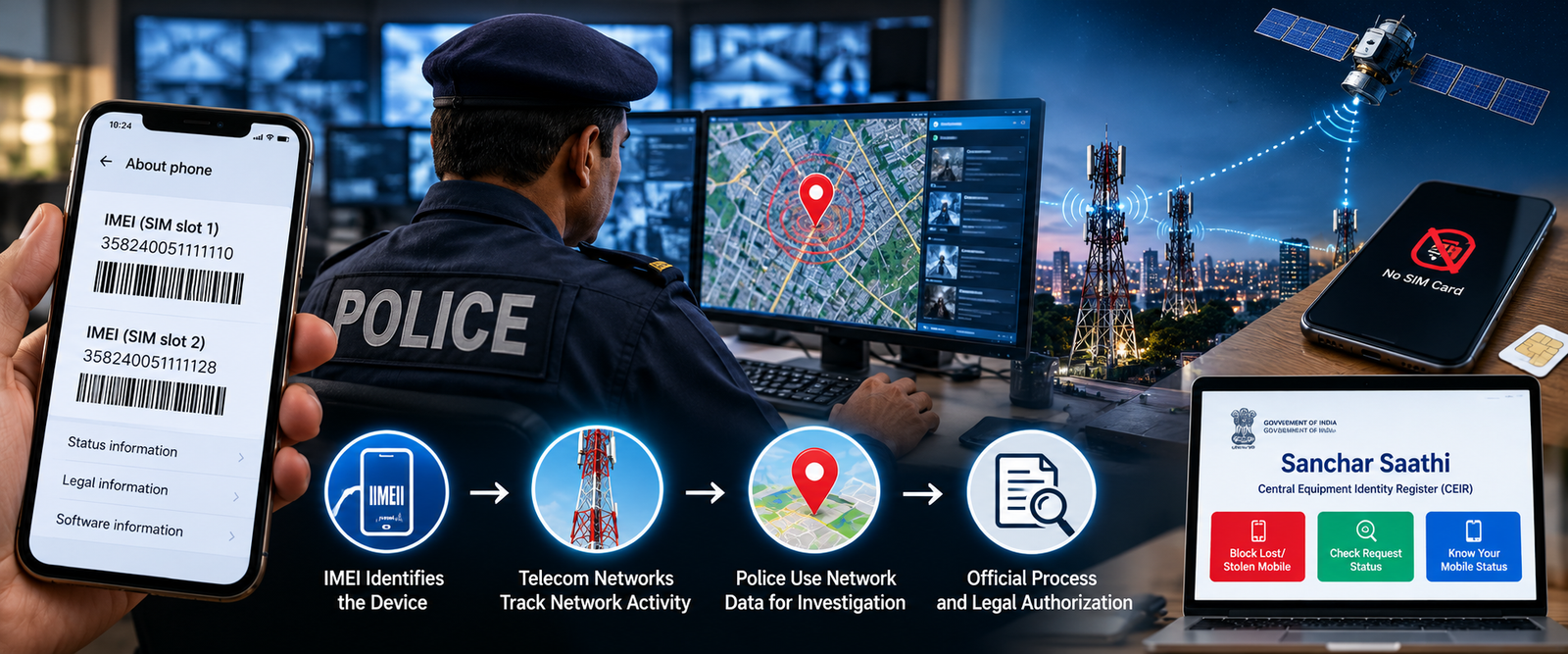
When a mobile phone is stolen, one of the first questions people ask is whether the police can locate it using its IMEI number. Searches for an imei tracker satellite often come from people hoping to see their missing phone on a map, even if the thief has removed the SIM card or switched off the device.
The reality is more complicated. An IMEI is a unique identifier associated with a mobile device, while satellite positioning and cellular network tracking are different technologies. Police may use an IMEI alongside telecom-network information and other investigative evidence to help identify or trace a stolen phone, but the number alone does not reveal its live location.
If your phone has gone missing, understanding these differences can help you avoid misleading tracking websites and take the right steps toward recovery. This guide explains how police may trace stolen mobile phones, what happens when a device is switched off, what information an IMEI can help investigators identify, and how to report a stolen phone in India.
Can Police Track an IMEI Number?
Yes, police may use an IMEI number to help trace a stolen mobile phone, but an IMEI does not independently provide its live location.
IMEI stands for International Mobile Equipment Identity. It is generally a 15-digit number used to identify a mobile device on cellular networks. Dual-SIM phones typically have a separate IMEI for each cellular radio or SIM slot.
When a phone connects to a mobile network, its IMEI may be used as part of the network's device-identification process. Telecom operators maintain systems that can help identify and restrict devices reported as stolen or otherwise prohibited from connecting to their networks.
During a theft investigation, authorized police personnel may work with telecom operators to examine relevant network records and other available evidence. If a stolen phone reconnects to a network, its activity may help investigators establish leads.
However, there is no guarantee that every stolen phone can be located. Results depend on factors such as network activity, available records, device condition, and the investigative process.
What does an IMEI actually identify?
An IMEI identifies a mobile device rather than the person carrying it. It is not the same as a mobile phone number, a SIM card identifier, or a GPS coordinate.
An IMEI can help distinguish a device from other devices on a network. It does not automatically disclose the owner's name, current address, private messages, or exact geographical position to anyone who knows the number.
How Does an IMEI Tracker Satellite Work?
The term imei tracker satellite can be misleading because an IMEI is not a satellite tracking transmitter. A phone's IMEI does not send its location to satellites simply because someone enters the number into a tracking website.
To understand what can actually happen, it helps to separate three technologies.
1. IMEI-based device identification
The IMEI helps cellular networks identify a mobile device. When a phone reconnects to a compatible network, relevant device-identification records may help authorized investigators connect the device with network activity.
This can be useful in a theft investigation, but identification is not the same as obtaining exact coordinates.
2. Cellular network tracing
Mobile networks communicate with phones through nearby cell sites. Depending on the available network records and technical circumstances, network information may help establish where a device was connected or provide location estimates.
The precision varies. A cell-site association may indicate a general area rather than the exact building or room where a phone is located.
More detailed network-based location analysis may require additional records, technical methods, and lawful authorization. It is not a public service available simply by entering an IMEI into a website.
3. GPS and satellite positioning
GPS-compatible phones can calculate their location using signals from navigation satellites. However, an IMEI does not itself activate GPS or transmit coordinates.
Location services and device-recovery apps may combine GPS, Wi-Fi, Bluetooth, internet connectivity, and other information to help locate a phone. The availability of those features depends on the device and its settings.
For this reason, websites claiming that an IMEI alone can instantly display a phone's satellite location should be treated with caution.
How Do Police Track Stolen Mobile Phones?
The exact investigative process varies by country, operator, and case. In general, tracing a stolen phone may involve several steps.
Step 1: Register a theft complaint
The owner reports the missing phone to the police and provides the relevant device details. A complaint creates an official record that can support subsequent investigation.
Step 2: Identify the device using its IMEI
Investigators use the IMEI supplied by the owner to help identify the relevant handset. The number may be available on the original box, purchase invoice, or the owner's device records.
Step 3: Coordinate with telecom operators
Where legally authorized and relevant, police may request information from telecom operators to investigate network activity associated with a device.
Depending on the available records, this information may help establish whether the device has connected to a network after the theft.
Step 4: Examine available evidence
Investigators may consider network information alongside the complaint, witness statements, CCTV footage, account-based location information, and other relevant evidence.
An IMEI is one potential investigative lead, not a guarantee of recovery.
Step 5: Attempt recovery and verify ownership
If a device is recovered, authorities may use its identifying details and supporting evidence to verify that it belongs to the complainant.
Owners should keep their complaint reference and purchase documents available in case additional verification is required.
Can Police Trace a Switched-Off Phone?
A switched-off phone generally cannot send new location updates through its ordinary active cellular connection. This makes real-time tracing more difficult.
However, switching off a device does not necessarily eliminate every possible source of information about its whereabouts.
Police may be able to examine network activity recorded before the phone was switched off. If the device later reconnects to a network, new activity may provide additional investigative leads.
Some modern phones also support offline-finding features that can help locate a device under specific conditions, including certain situations where it has no ordinary internet connection.
For example, Google's Find Hub supports offline finding on compatible devices when the required settings and conditions are met. Certain supported Pixel models can also be located for a limited period after being powered off. These features do not mean that an IMEI itself can locate every switched-off phone.
The practical distinction is:
Phone switched off: New location updates through ordinary active connections are generally unavailable.
Phone offline but powered on: A compatible offline-finding network may help in certain circumstances.
Phone reconnects to a cellular network: New network activity may provide useful investigative information.
Previously recorded location exists: It may provide a historical lead, but it is not necessarily the phone's current position.
No method guarantees that a switched-off phone will be recovered.
What Information Can Police Get From an IMEI?
The information available depends on the case, the relevant records, and the legal authority under which information is obtained. An IMEI alone is not a database containing every detail about a phone and its owner.
During an investigation, the IMEI may help police identify the device and correlate it with relevant records available through authorized channels.
Depending on the circumstances, investigators may be able to examine:
The device's IMEI and associated model information.
Relevant cellular network activity.
Available network or cell-site records.
Subscriber or SIM-related records obtained through appropriate legal procedures.
Previously recorded location information from relevant services, where lawfully available.
Other evidence that may help establish the device's movements or identify its current possessor.
These are possible sources of investigative information, not a list of details automatically revealed by every IMEI lookup.
A public IMEI checker may provide limited device information or status information, but it should not be assumed to have access to private telecom records or police databases.
Real Numbers: What India's CEIR Data Shows
India's Department of Telecommunications operates the Central Equipment Identity Register (CEIR) through the Sanchar Saathi initiative. The service allows users to request the blocking of lost or stolen mobile devices and check relevant request information.
The official CEIR dashboard, when accessed for this article, displayed the following cumulative figures:
Official CEIR dashboard metricReported figureMobile devices blocked61,70,344Mobile devices traced38,23,280
These figures are displayed by the government portal and should be treated as a dated snapshot, not a permanent total or a measure of the likelihood that any individual phone will be recovered.
The numbers demonstrate the scale of India's lost and stolen mobile-device reporting and blocking system. They do not mean that every blocked device was physically recovered or that every traced device resulted in a successful police handover.
How to Report a Stolen Phone in India
If your phone has been stolen, act quickly to protect your information and create an official record.
1. File a police complaint
Report the incident and keep a copy of the complaint or FIR, as applicable. Provide the phone's make, model, IMEI number, approximate time of theft, and any other relevant details.
2. Block the missing SIM card
Contact your telecom operator to suspend the missing SIM and ask about obtaining a replacement. This helps reduce the risk of someone misusing your mobile number.
3. Submit a CEIR blocking request
Visit the official Sanchar Saathi CEIR portal and follow the lost or stolen mobile blocking process.
The usual requirements include:
A copy of the police complaint or FIR.
A reissued SIM for the missing mobile number, used for OTP verification.
Valid identity proof.
The IMEI number or numbers, if available.
The purchase invoice, if available.
The official portal states that a successful blocking request generally results in the device being blocked across Indian mobile networks within 24 hours. It also explicitly states that blocking does not prevent police from tracing the lost or stolen phone.
If the stolen handset was never used with a SIM, the CEIR portal directs users to contact the relevant district nodal police officer with a complaint containing the IMEI number.
4. Use the phone's official recovery service
For Android devices, visit Google Find Hub. For Apple devices, use iCloud Find Devices.
If the relevant service was enabled before the phone went missing, it may help display an available or last-known location, secure the device, or erase it where supported.
5. Protect your personal accounts
Change important passwords if necessary, contact your bank if financial apps may be at risk, and secure accounts linked to the missing device. Avoid visiting a suspected thief's location or attempting to recover the phone through confrontation.
How to Track an IMEI Number Without Falling for Scams
When people search for an IMEI tracker, they may encounter websites promising instant live locations, owner identities, or access to private records.
Be cautious if a service:
Guarantees live satellite tracking from an IMEI alone.
Requests unnecessary passwords, OTPs, or personal information.
Demands payment to reveal a location it cannot substantiate.
Claims to have unrestricted access to telecom or police databases.
Offers no transparent explanation of its technology or data sources.
A legitimate device-information lookup and a live location-tracking service are not the same thing. Before sharing any details, check the service's purpose and privacy practices.
For a stolen phone, official recovery tools, the police, the telecom provider, and the CEIR portal are more appropriate starting points than an unverified tracking website.
Frequently Asked Questions
1. Can police track an IMEI number without a SIM card?
Police may be able to use previously recorded network activity or other lawful investigative information associated with a device's IMEI. If the phone has no active cellular connection, new network-based location information may not be available until it reconnects. The IMEI alone does not reveal live GPS coordinates.
2. Can police trace a phone that is switched off?
A switched-off phone generally cannot send new location updates through its normal active connections. Investigators may still examine earlier network records, and some compatible devices support limited offline-finding features. Whether a phone can be located depends on its model, settings, available records, and the circumstances of the case.
3. Does an IMEI tracker satellite show a stolen phone's exact location?
No ordinary public service can obtain a phone's exact live location simply by entering its IMEI number. An IMEI is a device identifier, not a satellite transmitter. Network-based investigation and supported device-finding services may help locate a phone, but neither guarantees exact coordinates or recovery.
Final Thoughts
Police may use an IMEI number as an important lead when investigating a stolen mobile phone, particularly when relevant network activity or other evidence becomes available. However, an IMEI tracker satellite is not a standalone technology that can instantly reveal a phone's location.
If your device is missing, report the theft, secure your accounts, contact your telecom operator, and use India's official CEIR process where applicable. Keep your IMEI and complaint details available, and rely on verified recovery channels rather than promises of guaranteed live tracking.

Leave a Reply
Your email address will not be published. Comments are reviewed before they appear.